If you’re going to play goalie in lacrosse, bruises are a part of the job.
Talk to any current or past lacrosse goalie and they’ll absolutely have a story, perhaps even an accompanying vicious photo, about a gnarly bruise they got in a practice or a game.
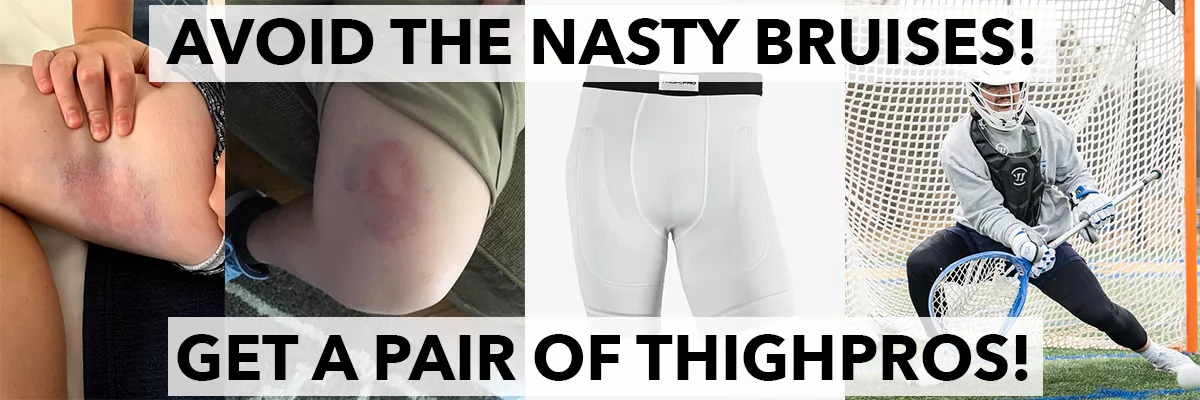
They can tell you the full evolution of a bruise from where it starts out as small red dot on your leg and then morphs into something like this –
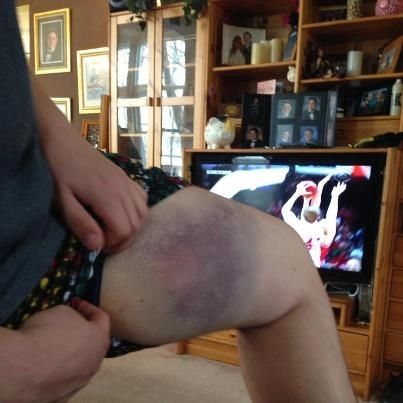
Getting bruises are a part of being a goalie, they’re our marks of pride. As such when you check the lacrosse goalie forums for advice on treating bruises most responses are along of the lines of – “Don’t treat it, show it off” or “Chicks dig the bruises dude”.
I do understand this line of thinking as you cannot be afraid of bruises to play goalie. You’re going to get them so might as well embrace them.
However I do think deep contusions should not go left untreated. If you can use sports medicine to help your body feel better, why wouldn’t you?
This post is a guide for lacrosse goalies wondering what they should do to treat bruises instead of simply “rubbing some dirt on it”.
We know bruises equal saves and we know what they look like and what they feel like.
But exactly happens to the body with a deep contusion.
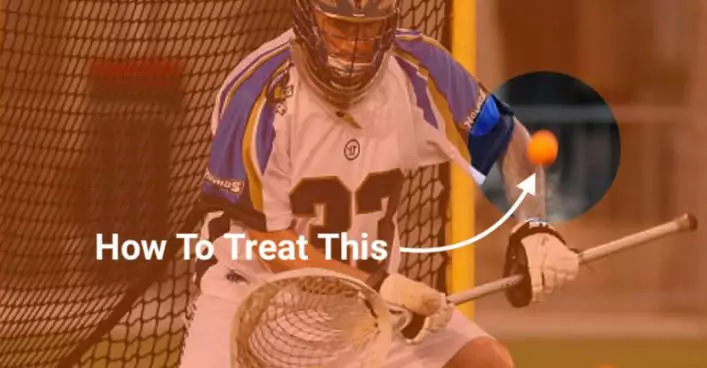
When a lacrosse balls strikes an unpadded part of your body the soft tissues under your skin which include connective tissue and muscle fiber are crushed, however the skin does not break or rupture unless maybe you received a Paul Rabil crank shot.
When these soft tissues are damaged, blood from the ruptured capillaries leaks out under the skin and pools, causing the area to swell and form a red or purplish mark that can be sore and tender to touch.
Better known to lacrosse goalies as this –
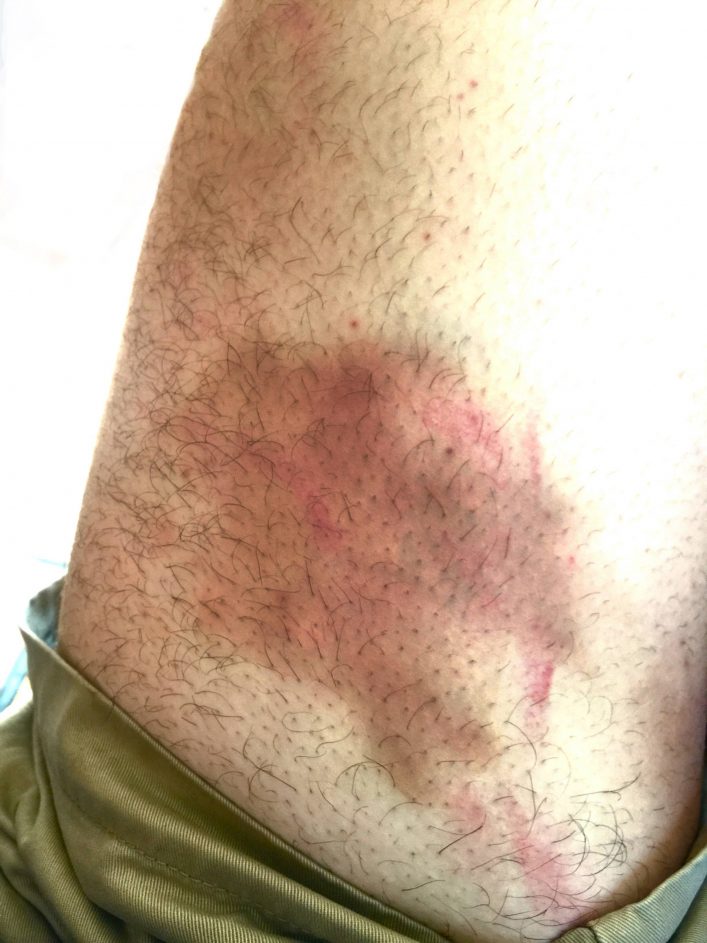
I remember some of my bruises looked like Van Gough paintings with a mixture of colors – beautiful reds, dashing purples and a splash of green or yellow thrown in to tease the eye palette.
While bruises to the legs where the most common, they didn’t hurt as much because there’s so much meat on the legs. The bruises that stuck with me the longest where direct hits to the shoulder muscle.
And of course there’s that one time I got hit in the neck during a drill by long pole trying to score from on the crease. But alas, back to bruise treatment.

Of course we’re not talking about that kind of RICE.
RICE in the sports medicine world stands for: Rest, Ice, Compression, Elevation.
It’s the framework most of us grew up with, and it’s still a solid starting point. Worth knowing though – the sports med world has updated its thinking over the last decade.
Even the doctor who coined RICE back in 1978 later walked it back, because it turns out some inflammation is actually part of how your body heals. So think of RICE as your first-48-hours playbook, then get moving again once the pain allows.
While there’s no eliminating a bruise on the spot, this approach will help reduce pain and swelling so the goalie can get back to 100%.
Rest – This is the toughest one for a lacrosse goalie because I don’t know any goalie that would sit out a practice with a bruise. It simply doesn’t happen nor would I recommend it because to be a goalie you have to be tougher than that. Like I said, bruises come with the job.
But if you’ve got a deep leg contusion, take it easy on that area for the first day or two – don’t go load up legs in the gym on top of a fresh bruise. The goal is to protect it early, not shut it down for a week. Sitting completely still actually slows you down. Once it’s not screaming at you, gentle movement is beneficial.
Ice – Put a pack of ice in a towel and then directly onto your bruise. Get it on there as soon as you can, about 15 minutes every few hours in the first couple days after taking the battle wound.
Ice is great for knocking down the pain and taking the edge off the swelling. Don’t expect it to magically speed up healing – the research is mixed on that – but for comfort right after a hit, it does the job.
Compression – Use an Ace Bandage to wrap the area where you took the bruise. This helps decrease swelling. Just don’t wrap it too tight – we don’t want any tingling, numbness, or extra pain in the area.
If you get a bruise mid-practice you can apply compression immediately. Squeezing the tissue underneath helps keep the blood vessels from leaking, so your battle wound won’t be quite as severe.
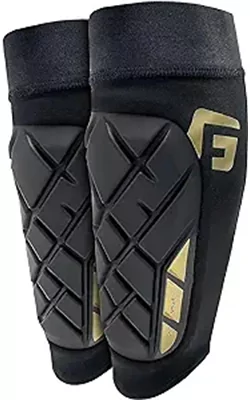
For thigh bruises you could also use a pair of Thigh Pro compression shorts. For hits to the calf or shin, a calf compression sleeve works.
You’ll see example of goalies using compression even in the pros and D1 college where the bruises, like the level of play, are elevated to the most extreme.
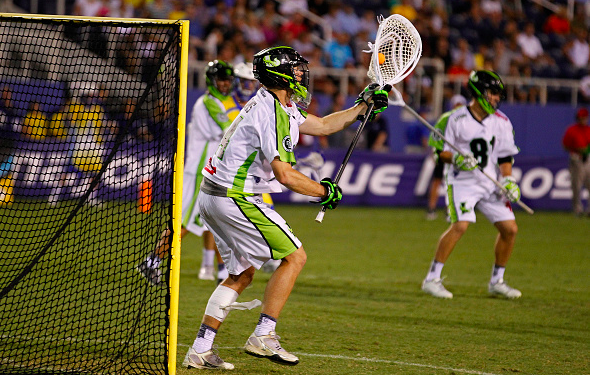
Elevation – The last step is to elevate the bruised area, ideally above your heart, which helps reduce blood flow to the area and bring down swelling.
So if your bruise is on your arm, prop it up with a pillow while you watch some lax on TV. If it’s on the leg, lie down on the couch with your legs up.
After the first 48 hours – once you’re past the ice phase – switching to heat can feel great on a deep bruise and the muscles around it. This is also where a warm Epsom salt bath comes in.
Quick reality check: you’ll see big claims online about Epsom salt detoxing you or fixing all sorts of things through your skin. The science on how much your body actually absorbs in a bath is shaky at best.
But a warm soak genuinely helps you relax, loosens up stiff muscles, and just feels good after a long weekend of eating shots. Add a couple cups of Epsom salt to a warm bath and soak for 15-20 minutes.
One timing note so you don’t undo your own work: keep heat OFF a fresh bruise for the first day or two. Early on, warmth can increase swelling. Ice first, save the warm soak for later in the healing process.
Besides the RICE treatment here are a few additional things to try to help get rid of a bruise or at least reduce the swelling and pain.
Easy on the Massage Early
You’ll see advice telling you to roll out a bruise right away to “get the blood flowing.” Be careful with that one, especially on deep thigh or shoulder contusions.
Aggressively massaging or rolling a fresh, deep bruise can actually make things worse – in some cases it raises the risk of a nasty complication called myositis ossificans, where bone starts forming inside the bruised muscle. Not worth it.
So for the first week or so on a deep contusion, leave it alone. No digging into it with a lacrosse ball, no foam rolling the center of it. Gentle, pain-free movement of the limb is fine and even helpful – just skip the deep tissue work until the bruise has settled down.
Once it’s an older, lighter bruise, then you can gently roll out the surrounding muscle to help things along. Ideally, you roll it out with the exact same ball that left the bruise so you can show that ball who the alpha dog on the field is.
Massaging bruises actives the lymphatic process so that the lacrosse goalie’s body naturally starts to rid itself of the bruise. Until the next one occurs, that is.
Apply Vinegar Mixture
It seems everyone has a different home remedy to try and treat bruises. One that worked for me in the past was applying a mixture of vinegar and warm water.
Vinegar will increase your blood flow near the surface of the skin. And of course that will help dissipate the blood that has accumulated under the surface.
There’s actually an insane amount of other home remedies for bruises if you’re interested in going down this route. The pineapple home remedy sounds pretty tasty.
Bruise Creams – Arnica Gel
There are a bunch of bruise creams like Arnica Gel that you can use to treat your lax goalie bruises.
These gels and creams provide soothing, light and non-greasy gel like cream penetrates deep into affected area, improves tissue recovery, alleviates pain and reduces tissue inflammation.
Can help with bruise recovery. Here’s an example on Amazon.
Of course instead of talking about treating bruises to the lacrosse goalies body parts an easier method is to prevent the bruises in the 1st place.
Lacrosse goalies simply don’t wear many pads, especially on the legs.
During one practice with no leg protection I took a crank shot to the thigh. It stung but just your average deep contusion.
On the very next rep of the same drill I took another crank shot that literally hit me in the exact same spot on my leg. That one hurt.
I didn’t own any lacrosse goalie pants at the time so I took an extra glove and taped it to my leg to cover the bruised area. Because if I got hit their again I swear my leg would have fallen off.
Although many goalies shy away from extra padding I do see more and more goalies moving towards getting more protected. Especially during practice when you’re taking a flurry a shots.
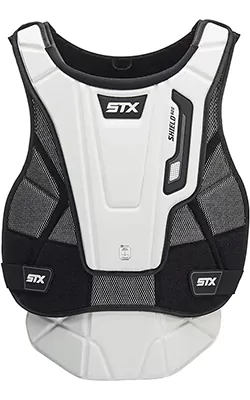
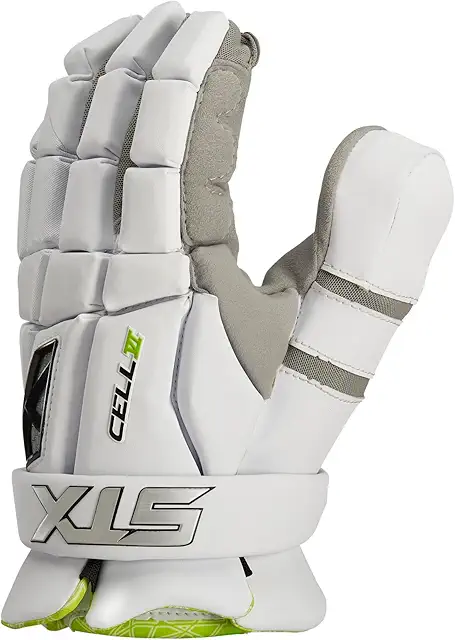
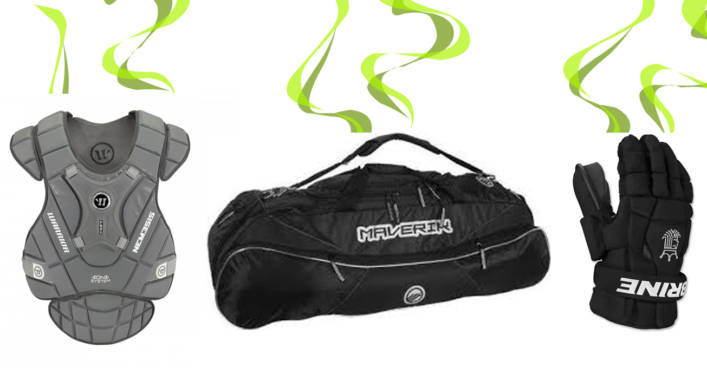
So strap on the additional goalie gear I describe in the lacrosse goalie gear guide and let the padding take the impact of the ball, not your flesh.
99% of the time a goalie bruise is just that – a bruise. It’ll run through its color show and fade out. But a few signs mean you should get it looked at:
- The bruise keeps growing or gets MORE painful a couple days after the hit
- A hard lump starts forming in the muscle
- You can’t fully bend the joint near it (like your knee after a thigh shot)
- Numbness or tingling in the area
- It’s taking weeks and weeks to clear, or you’re bruising really easily without much contact
None of that is meant to scare you – it’s just the stuff worth a quick check with a doctor or athletic trainer instead of toughing out.
Many goalies prefer to leave their bruises untreated and that’s totally ok. This article is not for you.
Bruises are apart of being a lacrosse goalie so hopefully if you’re goalie you don’t mind them too much because there’s no way to play this position and NOT get bruises.
But if you do get one its nice to know how to treat bruise so that pain, swelling, and discoloration are reduced and you can be back on the field making saves in 100% form.
Until next time! Coach Damon
How do other lacrosse goalies treat bruises received from shots? Let me know in the comments.



















 14 Amazing Lacrosse Goalie DrillsAug. 1, 2024
 Quick Guide To Lacrosse Slang TermsApril 14, 2025
 Lacrosse Goalies Rules To KnowJune 28, 2022
 Lacrosse Goalie Step-by-Step Guide to Getting RecruitedFebruary 6, 2022
 18 Lacrosse Goalie Drills to Improve Your GameApril 24, 2025
 7 Elements of a Great Lacrosse Goalie StanceAug. 1, 2020
 12 Lacrosse Goalie Tips To Take Your Game to the Next LevelSeptember 10, 2024
 STX Eclipse 3 Goalie Head ReviewApril 24, 2025
 Lacrosse Goalie WorkoutAug. 12, 2019
 The Basics of Making a SaveJune 29, 2021

















BRUISE FADEAWAY is a now available and claims it can help bruises to disappear in half the normal time, especially if applied soon after the bruise occurs. It is in a handy roll-on vial and can be applied quickly. Details are at satispharma.net/bruise-fadeaway.
Will knots on and around the shins cause permanent damage? My Son is a goalie and I insist he wears shin guards but he does not want to. He has a large, hard knot on his shin near his ankle from a month ago when he blocked a shot during a game. I am concerned that he is going to have damage and pain when he is older if he keeps getting these hard hits unprotected. Please advise. Should be wear shin guards?
I know a few goalies who suffered shin splints from repeated blows to the shins. I do think goalies should be wearing some sort of protection during practice so as not to suffer permanent damage.